
 Image 1 of 3
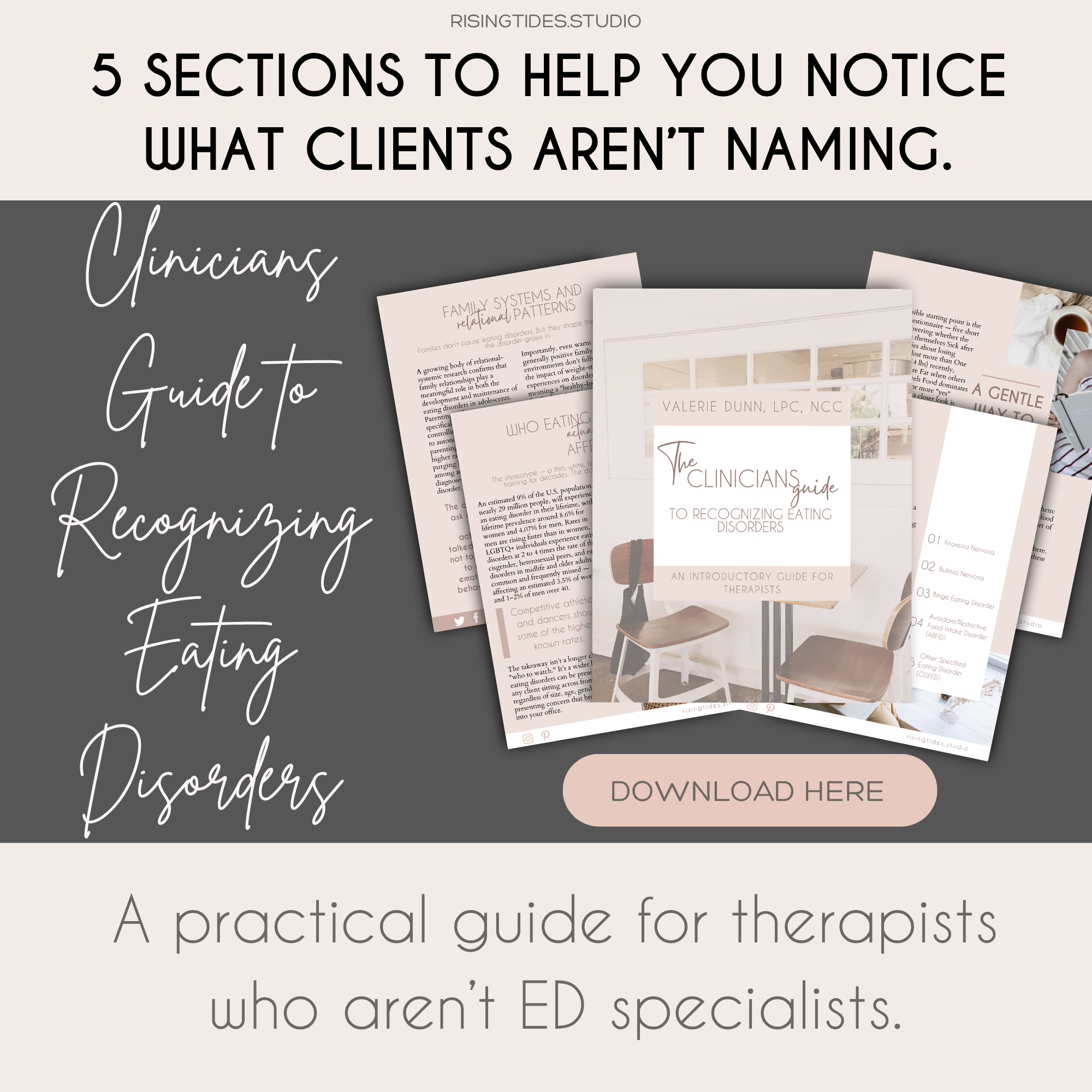 Image 2 of 3
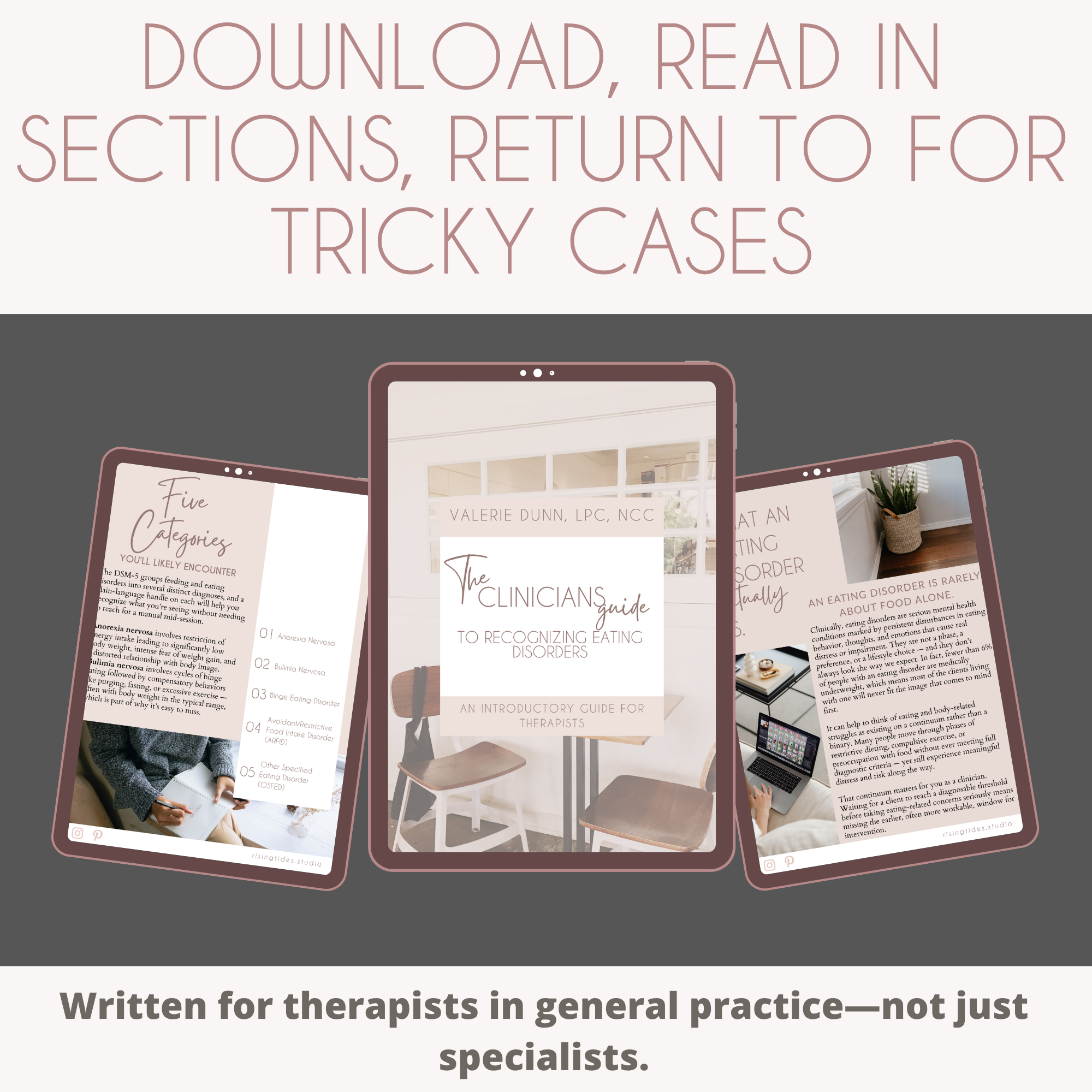 Image 3 of 3
You know those clients where something about food, body image, or “health” just doesn’t sit right—but you’re not an eating disorder specialist?
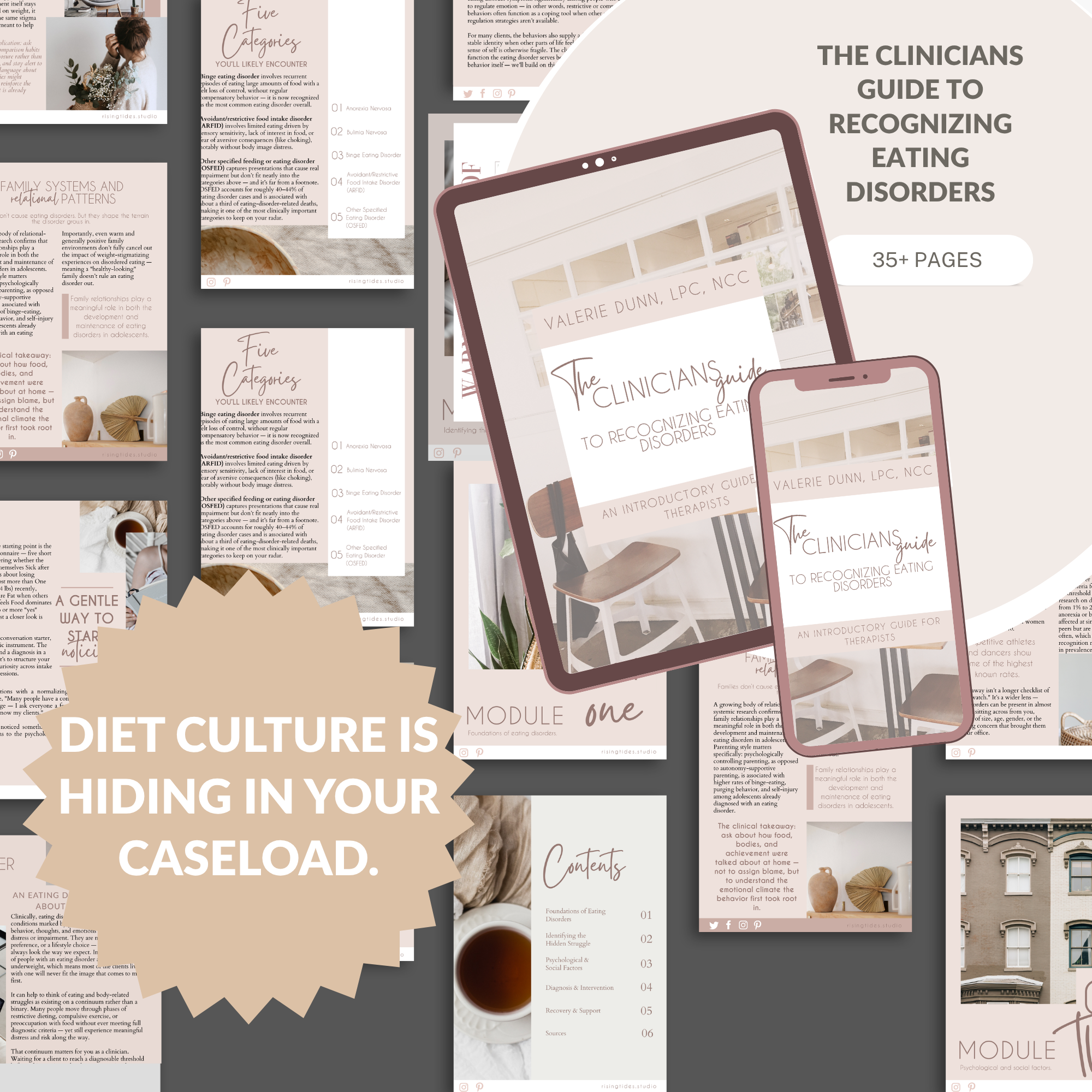
This ebook was made for you. It gives you a clear, down‑to‑earth way to notice when an eating disorder might be part of the picture, without turning your practice into a full ED clinic.
Instead of a textbook or a dense manual, this guide walks you through how eating disorders actually show up in real-world therapy: in the language clients use, the “normal” diet culture behaviors they describe, and the stalled progress you may already be seeing in anxiety, depression, or trauma work.
---
What’s inside
The ebook is broken into five easy sections you can read between sessions or on a slow afternoon:
• Foundations of Eating Disorders – A plain-language overview of the main diagnoses (including OSFED and ARFID), why eating disorders are rarely just about food, and why thinking in terms of a continuum helps you catch concerns earlier.
• Identifying the Hidden Struggle – How eating disorders hide behind GI issues, “healthy lifestyle” goals, or perfectionism; plus the quiet cues (language, behavior, and physical complaints) that deserve a closer look even when someone doesn’t fit the stereotype
• Psychological and Social Factors – A practical look at how perfectionism, emotion regulation, family dynamics, trauma, weight stigma, and social media all weave together for many clients.
• Diagnosis and Intervention – Simple tools like the SCOFF questions, ideas for how to bring up your concerns without centering weight, and a clear overview of levels of care so you know when it’s time to loop in medical providers or specialists.
• Recovery and Support – A realistic view of recovery (including setbacks), how to think beyond weight and behaviors, and how you can stay a steady, supportive presence while a full team handles medical and nutritional care.[Attachment]
---
This ebook is for you if…
• You’re a therapist, counselor, or trainee who doesn’t specialize in eating disorders but wants to stop second‑guessing yourself when something feels “off.”
• You work mainly with anxiety, depression, trauma, or family systems and suspect food or body image is playing a bigger role than clients are naming out loud.
• You want a resource that feels warm, clear, and grounded in research—but still sounds like a human, not a textbook.
• You like learning in manageable pieces you can return to when a specific client or case comes to mind.
This is not a treatment manual and won’t replace specialized training or medical care. It’s meant to help you notice sooner, ask better questions, and get clients connected with the right level of support when that’s needed.
---
What you’ll get
• 1 digital ebook (PDF)
• Approx. length: 38 pages
• Instant download after purchase
• Easy to read on a laptop, tablet, or printed at home
No physical item will be shipped.
---
How you might use it
• As a self-study guide to widen your lens around eating disorders in general practice.
• As a conversation starter in supervision, consultation, or team meetings.
• As part of your ongoing professional development if you’re noticing more clients talking about food, weight, or body image.
---
Important notes
This ebook is for educational and professional development purposes only. It does not offer medical advice, does not replace supervision or consultation, and is not a substitute for specialized eating disorder training or higher levels of care. Always collaborate with medical and nutritional providers when safety is a concern.
You know those clients where something about food, body image, or “health” just doesn’t sit right—but you’re not an eating disorder specialist?
This ebook was made for you. It gives you a clear, down‑to‑earth way to notice when an eating disorder might be part of the picture, without turning your practice into a full ED clinic.
Instead of a textbook or a dense manual, this guide walks you through how eating disorders actually show up in real-world therapy: in the language clients use, the “normal” diet culture behaviors they describe, and the stalled progress you may already be seeing in anxiety, depression, or trauma work.
---
What’s inside
The ebook is broken into five easy sections you can read between sessions or on a slow afternoon:
• Foundations of Eating Disorders – A plain-language overview of the main diagnoses (including OSFED and ARFID), why eating disorders are rarely just about food, and why thinking in terms of a continuum helps you catch concerns earlier.
• Identifying the Hidden Struggle – How eating disorders hide behind GI issues, “healthy lifestyle” goals, or perfectionism; plus the quiet cues (language, behavior, and physical complaints) that deserve a closer look even when someone doesn’t fit the stereotype
• Psychological and Social Factors – A practical look at how perfectionism, emotion regulation, family dynamics, trauma, weight stigma, and social media all weave together for many clients.
• Diagnosis and Intervention – Simple tools like the SCOFF questions, ideas for how to bring up your concerns without centering weight, and a clear overview of levels of care so you know when it’s time to loop in medical providers or specialists.
• Recovery and Support – A realistic view of recovery (including setbacks), how to think beyond weight and behaviors, and how you can stay a steady, supportive presence while a full team handles medical and nutritional care.[Attachment]
---
This ebook is for you if…
• You’re a therapist, counselor, or trainee who doesn’t specialize in eating disorders but wants to stop second‑guessing yourself when something feels “off.”
• You work mainly with anxiety, depression, trauma, or family systems and suspect food or body image is playing a bigger role than clients are naming out loud.
• You want a resource that feels warm, clear, and grounded in research—but still sounds like a human, not a textbook.
• You like learning in manageable pieces you can return to when a specific client or case comes to mind.
This is not a treatment manual and won’t replace specialized training or medical care. It’s meant to help you notice sooner, ask better questions, and get clients connected with the right level of support when that’s needed.
---
What you’ll get
• 1 digital ebook (PDF)
• Approx. length: 38 pages
• Instant download after purchase
• Easy to read on a laptop, tablet, or printed at home
No physical item will be shipped.
---
How you might use it
• As a self-study guide to widen your lens around eating disorders in general practice.
• As a conversation starter in supervision, consultation, or team meetings.
• As part of your ongoing professional development if you’re noticing more clients talking about food, weight, or body image.
---
Important notes
This ebook is for educational and professional development purposes only. It does not offer medical advice, does not replace supervision or consultation, and is not a substitute for specialized eating disorder training or higher levels of care. Always collaborate with medical and nutritional providers when safety is a concern.